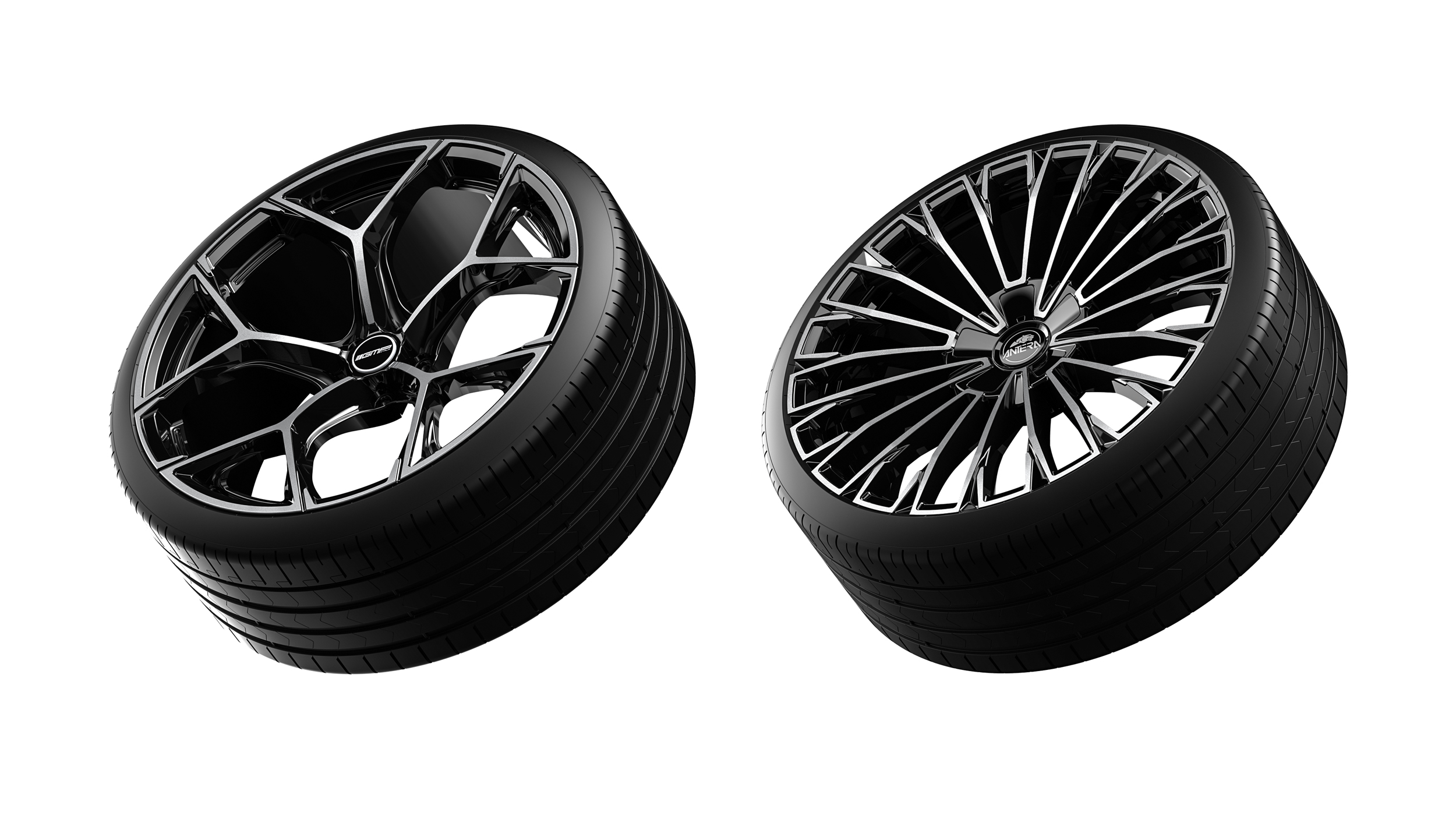

Summer tire changes: a complete guide to choosing alloy wheels for the summer

The transition from the winter tire change to the summer tire change is a fundamental operation for those who want to maintain optimal performance, safety, and longevity of their vehicle. Even the most experienced tire specialists and mechanics know that simply replacing the tread is not enough: the selection and maintenance of alloy wheels play a crucial role in road holding, steering precision, and the overall aesthetics of the car.
When should summer tires be fitted?
In Italy, the installation of summer tires is regulated by a mandatory period that generally runs from April 15 to May 15 each year. During this interval, it is permitted to replace winter tires with summer ones, with a tolerance margin allowing the operation to be completed by the second half of May.
- Recommended start date: April 15
- Completion deadline: May 15
These dates may vary slightly depending on regional regulations, but they represent the standard reference.
It is advisable to book the tire change a few weeks in advance to avoid seasonal queues.
How to choose alloy wheels for summer tires
Choosing the ideal alloy wheels for summer depends on a range of technical and aesthetic factors that must be carefully evaluated.
Purpose of use and pairing
Alloy wheels are now the standard for mid-range and high-end vehicles equipped with summer tires, thanks to their lightness, rigidity, and premium finishes. They are particularly appreciated by those seeking a more precise steering response on dry asphalt, a reduction in unsprung mass—which translates into improved acceleration and braking performance—and a high degree of aesthetic customization.
Dimensions and technical specifications
To ensure compatibility and optimal performance, it is essential to verify some key parameters of each wheel: the diameter (for example 17", 18" or 19"), the rim width expressed in inches, the ET (offset), which indicates the distance in millimeters between the geometric center of the wheel and the mounting surface on the hub, the PCD (Pitch Circle Diameter), such as 5×112, which specifies the number and arrangement of the mounting holes, and finally the CB (Centre Bore), namely the diameter of the central hole that fits onto the hub. Correctly choosing these measurements is essential to avoid installation issues, uneven tread wear, and inaccuracies in speedometer readings.
Aesthetics vs. performance vs. price
The choice of a summer alloy wheel stems from a synergistic balance between aesthetics, performance, and economic sustainability. Finishes, from diamond-cutting to powder coating and polishing, not only enhance the design but, when carried out with certified processes, ensure high abrasion resistance against salt and gravel. Anodizing adds a thin layer of aluminum oxide capable of protecting the surface from oxidation, while the nano-ceramic coating protects the wheel from dirt and atmospheric agents, simplifying maintenance.
From a mechanical standpoint, a well-engineered structural design optimizes the overall weight of the wheel, reducing unsprung loads and improving the vehicle’s dynamic response, while ensuring adequate fatigue resistance and a prolonged life cycle.
Although the initial investment for a premium wheel is higher than entry-level solutions, the long-term return translates into reduced fuel consumption and less wear on mechanical components (bearings, suspensions, tires).
To ensure the installation of wheels with valid approvals and quality certifications, it is always advisable to rely on authorized dealers, such as GMP or Antera, capable of offering both compliance with current regulations and post-sales support.
What checks should be carried out on summer alloy wheels before the summer season?
Here are the essential checks to perform immediately after removing summer alloy wheels from winter storage, before proceeding with installation.
1. Removal and preliminary inspection. The wheel must be taken out of its protective cover in a clean and well-lit area, in order to minimize the risk of contamination from dust or debris. Any surface residues, such as dust or traces of mold, should be gently removed using compressed air or a soft brush to ensure a clean surface before proceeding to the next stages.
2. Thorough visual inspection. It is important to carefully check the integrity of the wheel, using strong lighting and, if possible, a magnifying glass. The presence of micro-cracks, especially around the mounting holes, on the spokes or along the rim, can seriously compromise safety, even if they are small fractures.
It is also necessary to check that the rim maintains perfect circularity: any deformation, bending, or ovalization can cause vibrations while driving, pressure loss, and uneven tire wear.
It is also advisable to pay attention to any signs of corrosion, such as bubbles under the paint or oxidation spots, often caused by prolonged exposure to salt and moisture.
These defects, if neglected, can compromise both the aesthetics and durability of the wheel.
3. Cleaning and drying. After inspection, it is essential to proceed with a thorough cleaning of wheels and tires, using fresh water and a neutral detergent. This step allows effective removal of potentially harmful residues such as salt, dirt, and organic materials.
After washing, carefully dry all surfaces using microfiber cloths. Complete drying is crucial to prevent moisture buildup, which could lead to corrosion or mold during storage or use.
4. Balancing and concentricity check. After installation, the tire specialist will perform dynamic balancing of the wheel using an electronic balancing machine, applying the necessary counterweights. Any disassembly or reassembly can alter the original balance, and proper balancing is essential to eliminate vibrations felt in the steering wheel or transmitted to the chassis while driving.
At the same time, it is advisable to check the wheel centering to detect any ovalization. In workshops equipped with dial indicators or laser measurement systems, radial and axial deviations are measured to determine whether the wheel can be restored or must be replaced to ensure vehicle safety and stability.
5. Reapplication of nano-ceramic protections and sealants. If the wheel has previously been treated with a hydrophobic coating, such as a nano-ceramic protection or sealant, it is advisable to assess its condition and, if necessary, proceed with reapplication. These treatments create a protective barrier that facilitates cleaning and helps preserve aesthetic finishes, protecting the surface from corrosion caused by sea salt, atmospheric agents, and road contaminants. Renewed protection ensures greater durability and easier maintenance over time.
Does seasonal tire change affect wheel wear?
From a structural standpoint, alloy wheels are designed to withstand repeated cycles of tire mounting and dismounting without significant wear. However, on a cumulative level, each disassembly operation may introduce micro-damage which, if neglected, can compromise the integrity of the wheel system over time.
In particular, the tire bead may suffer minor damage during removal, with the risk of affecting both the tire and the inner edge of the rim. Likewise, the outer edge of the wheel is exposed to scratches or scuffs that can break the protective paint layer, making the surface vulnerable to corrosion. Careful attention during every disassembly operation is therefore essential to preserve the durability and safety of the wheel.
To eliminate these effects, it is advisable to adopt a second set of complete wheels (more affordable steel wheels for winter and alloy wheels for summer), reducing to zero the number of mountings on the same rim.
For a professional-level result, it is always advisable to rely on an experienced tire specialist equipped with advanced tools and specific expertise in alloy wheel care. In this way, the summer tire change will not simply be a seasonal requirement, but an opportunity to enhance the vehicle’s appearance and performance, while ensuring maximum safety and peace of mind behind the wheel.