The Importance of Alloy Wheels in the Automotive Industry
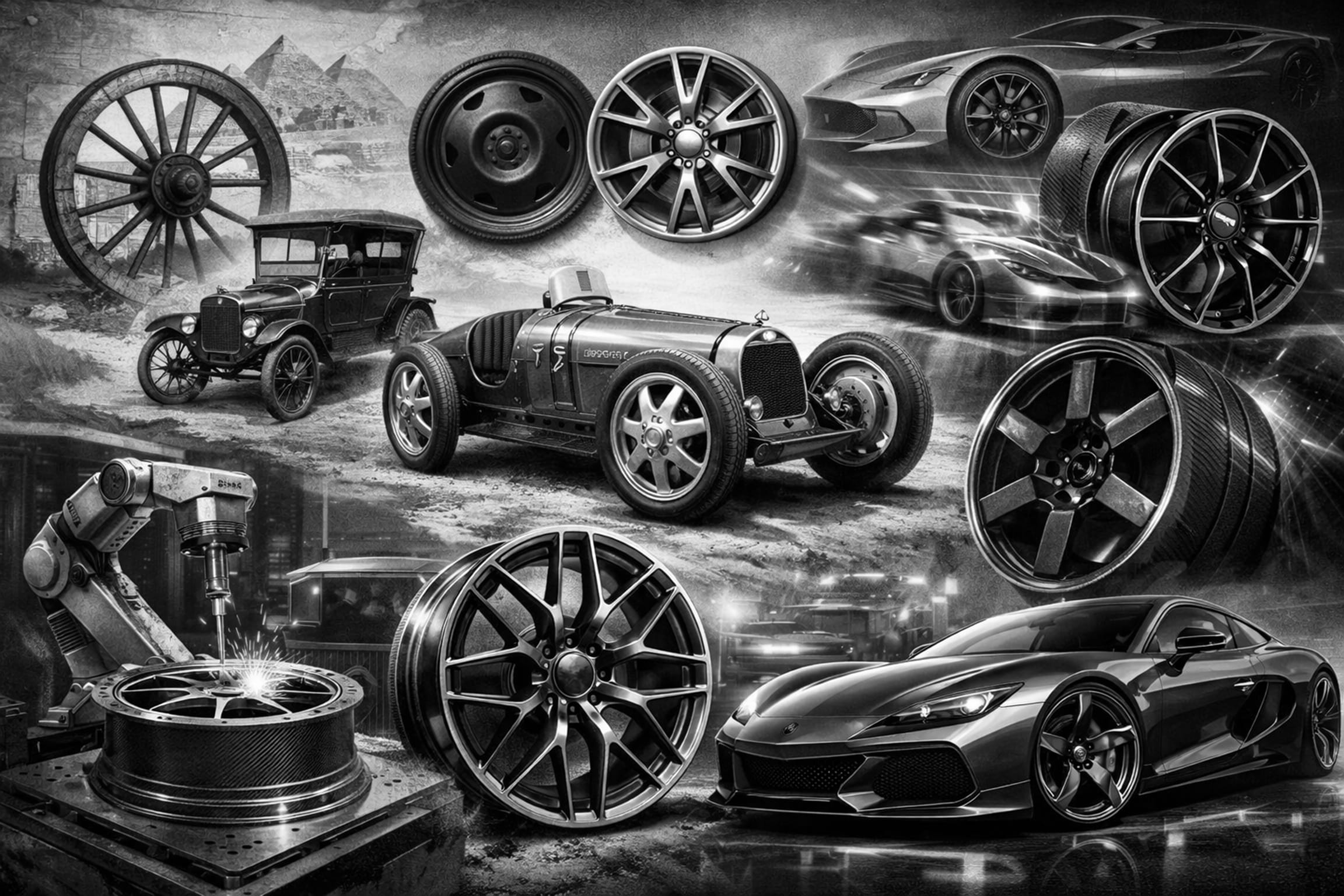
In the diverse world of motorsport, alloy wheels have a value that goes far beyond aesthetics: these elements, now symbols of performance and personalization, have undergone decades of technical and stylistic evolution. From simple wooden wheels to high-tech carbon-fiber components, wheels tell a story shaped by innovation, culture, and passion for the automobile.
It All Began with the Wooden Wheel
To understand the importance of alloy wheels in the automotive industry, it is useful to take a step back in time and observe the evolution of the wheel. The earliest wheels were simple wooden discs, initially used for pottery making and later for the first carts in Mesopotamia around 3500 BC.
The pursuit of better performance emerged around 2000 BC with the introduction of spoked wheels. This innovation made it possible to use less material while achieving greater lightness. This allowed horses or oxen to tire less, improving the speed and efficiency of carts, both for transporting goods and people and for military use.
Even then, attention to material selection and wheel structure was essential to ensure durability on the roads. Naturally, there was also an aesthetic pursuit, guided by empirical and artisanal experimentation that led to increasingly advanced prototypes, adapted to the needs and tastes of different civilizations.
Although all this may seem distant in time, aesthetics, lightness, and strength remain today the fundamental principles that guide the development of modern alloy wheels.
Evolution Continues: From Carts to Automobiles
Let’s fast-forward 4,000 years and enter the era of the automobile. With the advent of the first motor vehicles, wheels with wooden components were not abandoned; on the contrary, they continued to be used, carrying forward an engineering legacy rooted in the carts of antiquity.
An iconic example is the Ford Model T, produced between 1909 and 1925, considered the first automobile accessible to the general public and a symbol of mass motorization in the United States. This vehicle came standard with artillery-type wheels, featuring robust wooden spokes paired with a tire.
Although alternative technologies already existed at the time, wooden wheels for cars remained in use until the late 1920s.
The reasons were multiple:
- There was greater know-how in wooden wheels compared to metal wheels
- Consumers considered this type of wheel familiar.
- Production costs were relatively low
All this highlights how the importance of alloy wheels in the automotive industry is not only a matter of technological innovation, but also of cultural and industrial evolution.
From Bicycles to Cars: The Arrival of Metal Spoked Wheels
Another crucial step was the introduction of metal spoked wheels, originally designed for bicycles and then adapted in the early 20th century for automobiles. This transition represented a key evolution leading to modern alloy wheels, especially in terms of focus on lightness and performance.
Among the most significant advances was the development of tangential spoked wheels, similar to those on today’s road motorcycles. This configuration made it possible to increase the strength and resistance of the spokes even on heavier and faster cars. As early as 1907, the first versions of detachable and interchangeable spoked wheels appeared: a true revolution for the time.
Metal spoked wheels were lighter than wooden wheels or solid steel wheels and, beyond functionality, they also offered an appealing aesthetic. This style became particularly popular on sports and racing cars, often equipped with central locking mechanisms to make replacement easier during races.
Steel Takes the Lead: The Arrival of Disc Wheels
Steel quickly established itself as the ideal material for manufacturing car wheels thanks to its lower production costs and greater durability compared to other alternatives.
The birth of disc wheels, however, completely changed the automotive industry and, as a result, the aesthetics of car wheels. The disc was made by welding or riveting together two stamped steel parts: the rim and the central disc.
As early as 1908, the British company Sankey patented the first fully welded and detachable steel wheel, marketed as the All Steel Wheel. However, the real turning point came in 1934 with the introduction of the stamped steel wheel with a central well, known as the steelie, which quickly became the standard of the mass automotive industry.
Stamped steel wheels offered tangible advantages over spoked wheels:
- Reduced production times and costs
- High resistance to damage
- Long service life
It must be said, however, that the transition from spoked wheels to disc wheels was driven more by production practicality than by performance. Steel enabled simpler and more standardized manufacturing, making large-scale production possible, at the expense of lightness and, above all, the vehicle’s aesthetics.
This solution proved perfect for economy cars and daily-use vehicles, even though in sports cars spoked solutions continued (and still continue) to be preferred in order to prioritize lightness and performance.
Thus, after thousands of years of spoked wheels, the solid wheel once again became predominant in everyday transportation.
The Birth of Alloy Wheels: Lightness and Innovation
While the market was increasingly shifting toward steel-rimmed wheels, leaving spokes to racing cars only, one man had the vision to go beyond: Ettore Bugatti. With his legendary Type 35, introduced in 1924, Bugatti became the pioneer of alloy wheels in the automotive sector.
These first aluminum alloy spoked wheels were revolutionary: they were cast and directly integrated the brake drum. The result? Significant weight savings, greater efficiency in heat dissipation and markedly superior performance in terms of braking and handling. It is no coincidence that the Type 35 is still one of the most iconic racing cars in history.
The Advantages of Aluminum Alloy Wheels Compared to Steel
- Lower weight, improving braking, steering response, and overall handling.
- Superior heat dissipation: aluminum absorbs and disperses heat generated by the brakes more effectively, reducing the risk of overheating and increasing the effectiveness of the braking system.
The Disadvantages
- High production costs
- Limited use in competition and on elite vehicles
Despite this, the impact of this innovation was profound. Alloy wheels did not immediately take hold in mass production, but they left an indelible mark that would strongly influence the decades to come. Bugatti’s vision laid the foundation for a future in which the importance of alloy wheels in the automotive industry would become central, especially in the union of aesthetics and performance.
Alloy Wheels as a Symbol of Style
Over time, alloy wheels distinguished themselves not only for superior performance, but also for their greater stylistic freedom compared to simpler stamped steel wheels. This marked a real turning point starting in the 1950s, when car design began to play an increasingly central role in brand perception and buyers’ choices.
Thanks to new aluminum casting processes, alloy wheels could take on complex, lightweight, eye-catching forms impossible to achieve with steel. This made them particularly popular not only in the world of sports and luxury cars, but also, starting in the early 1970s, as an optional feature available on more affordable car models, thus opening the market to a much wider audience.
With continuous improvements in manufacturing techniques and the resulting cost reduction, the aesthetic potential of alloy wheels became increasingly important, sometimes even surpassing purely functional benefits. The wheel was no longer just a technical component, but a distinctive element of automotive design.
The 1950s and 1960s: The Aftermarket Boom
In the 1950s, hot rod enthusiasts began modifying the appearance of their cars through aftermarket accessories. Standard steel wheels were enhanced with hubcaps, trim rings, and chrome finishes, giving rise to a true culture of automotive personalization.
Meanwhile, the OEM (Original Equipment Manufacturer) industry was still unable to fully satisfy these needs, and so the aftermarket world filled that gap, paving the way for the definitive rise of alloy wheels.
The Dawn of Alloy Wheels
A further leap in quality occurred in the mid-1960s, when specialized aftermarket brands emerged in the United States. The first aftermarket alloy wheels combined five aluminum spokes with a chrome-plated steel rim, reconciling lightness and strength in an appealing design inspired by spoked wheels.
This moment marked a decisive turning point in the market: for the first time, wheels were not simply modified or embellished, but designed from scratch to offer improved performance and original style.
At the same time, high-performance magnesium alloy solutions were also being developed. The production technologies for these wheels were developed within motorsport and later transferred to the mass market through the aftermarket.
It should be noted that racing wheels, in addition to ensuring lightness, rigidity, and heat dissipation, stood out for a striking design that did not go unnoticed. Enthusiasts, seeing them in action on competition cars, began to desire the same style for their private cars, fueling demand.
Many of these innovations originated in the American market and later spread to Europe and the rest of the world, profoundly influencing both OEM manufacturers’ choices and consumer preferences.
The importance of alloy wheels in the automotive industry continued to grow. By now, the wheel was no longer just a technical component of the car, but a symbol of status, technology, and passion.
Trends from the 1970s to the 1990s: Between Culture, Style, and Technology
Initially associated with sports and luxury models, alloy wheels gradually established themselves on mid-range vehicles as well, becoming an integral part of the automobile’s design language.
During this period, various cultural and stylistic trends related to wheels developed:
- In the 1970s and 1980s, lowrider culture in the United States made large, chrome, and flashy wheels popular, often chosen to emphasize the vehicle’s uniqueness.
- “Bundt” wheels by Mercedes-Benz became an icon of European luxury.
- In the 1980s, full-face wheels became popular.
- At the same time, Japanese tuning brought lightweight and functional alloy wheels to prominence, contributing to the popularity of Japanese brands in the sector.
- The 1990s saw the explosion of the “spinner” phenomenon, rotating alloy wheels with dynamically styled spokes.
An important stylistic change occurred between the late 1980s and early 1990s with the spread of thin-spoke wheels on luxury cars, paving the way for a new balance between elegance, lightness, and engineering.
Thanks to technological progress, design gradually returned to emphasizing the idea of the “empty wheel”, with slender spokes and aerodynamic shapes, in sharp contrast to the solid wheels of previous years. This return to “functional emptiness” once again highlights the importance of alloy wheels in the automotive industry, capable of reflecting not only technological evolution, but also the cultural and stylistic transformations of the sector.
Antera: A Leading Brand in the 1990s
In the global alloy wheel landscape, Antera represents a chapter of absolute excellence. Founded in Italy in 1991 by Marco Muzzarelli, the company quickly established itself in the premium aftermarket segment, with a clear and ambitious philosophy: “No Compromise”. The goal was to overcome the historic dichotomy between technical performance and refined aesthetics, merging them into products of the highest level—both functional and visual.
The name Antera comes from the combination of the Latin words Ante ‘before’ and Aera ‘era’, emphasizing a vision projected toward the future and a desire for radical change in the world of car wheels.
Antera’s distinctive design marked an era. New-age lines, rounded spokes, unprecedented proportions: the brand brought a completely new aesthetic language to the aftermarket sector. Its most famous creation is the legendary Type 109, a three-spoke alloy wheel with a revolutionary design, winner of the “Alloy Wheel Design of the Year” award in 1994.
Innovations of the Type 109:
- Integrated center cap that concealed the bolts, aligned with the design.
- Hidden Schrader valve, for a clean and uniform profile.
- An unconventional aesthetic combining functionality and originality.
The success of the Type 109 turned Antera into an icon among tuners and automotive club enthusiasts. Its influence extended far beyond Italy’s borders, helping to diversify the aesthetics of aftermarket wheels in the 1990s and 2000s. Even today, this model enjoys a new wave of popularity, testifying to its lasting cultural impact and the status it has achieved in the world of tuning and customization.
In this context, the importance of alloy wheels in the automotive industry manifests itself in full force: not only technical components, but true cult objects, capable of combining form, function, and vision.
Alloy Wheels Today: Current Market Trends
Innovative Materials
Modern wheel technology includes aluminum alloys, magnesium alloys, and carbon fiber. The use of these materials reflects an ongoing pursuit of weight reduction and performance improvement, particularly in the high-end and sports car segments. Their use directly responds to the demand for better handling, acceleration, and braking, demonstrating a performance-oriented evolution in wheel technology.
Advanced Production Technologies
Today, the importance of alloy wheels in the automotive industry also involves the adoption of cutting-edge production technologies that revolutionize how wheels are designed and manufactured.
Among these, we find:
- Flow Forming: a technique that makes it possible to produce lighter and stronger wheels. Through the rotation and compression of the raw rim, material distribution is improved, resulting in a final product with excellent structural performance and greater dimensional precision.
- 3D Printing: an emerging technology that opens new possibilities for complex and highly customizable structures. Although still experimental for large-scale production, it offers potential for radical innovations in design.
The Antera Case: HPE Lab and Intelligent Cooling
Antera has introduced a pioneering approach to production with its HPE Lab (High Precision Engineering), overcoming the limits of traditional casting. At the heart of the innovation is Active Intelligent Cooling, a dynamic cooling system driven by artificial intelligence, designed to optimize stability, precision, and production quality.
The process is based on three pillars:
- Real-time monitoring during low-pressure casting.
- Automatic stabilization thanks to proprietary AI software.
- Absolute repeatability of production conditions.
This system sequentially activates the cooling channels in specific areas of the mold, like an engine’s cylinders, adapting to each model. The result is rapid and uniform solidification, which improves the material’s mechanical properties, reduces structural thickness, and enables the creation of lighter wheels without sacrificing strength.
Antera has brought alloy wheel production to a new standard of precision and performance, making the manufacturing process not only more efficient, but also more consistent with the brand’s sophisticated aesthetics.
Contemporary Design Styles and Consumer Preferences.
Beyond the technical aspect, current trends in alloy wheel design show a wide variety of styles, materials, and finishes, reflecting the evolution of taste and the growing desire among car enthusiasts to personalize their vehicles.
Among today’s most popular trends we find:
- Large-diameter wheels, often associated with sports cars, SUVs, and high-end vehicles.
- Intricate designs and complex machining, made possible by new production technologies.
- Diamond-cut finishes (diamond cut), once reserved for the premium segment, now more accessible thanks to industrialization.
Today, the importance of alloy wheels in the automotive industry is measured not only in terms of performance, but also as an expressive tool, an integral part of the vehicle’s identity and a symbol of personalization.In conclusion
Once a purely functional element, wheels have now become a fundamental component of automotive design. From the era of wooden wheels to modern alloy wheels, evolution has followed a dual path: technology and style.
Starting in the 1980s and 1990s, aesthetic improvement became evident. The aftermarket played a key role in spreading trends, personalization, and innovative design. Today, motorists choose a wheel not only for its performance, but also for what it communicates visually.
Thanks to technological advancement and the commitment of visionary brands such as Antera, it has been possible to integrate form and function, offering wheels that are increasingly high-performing, lightweight, and stylistically advanced.
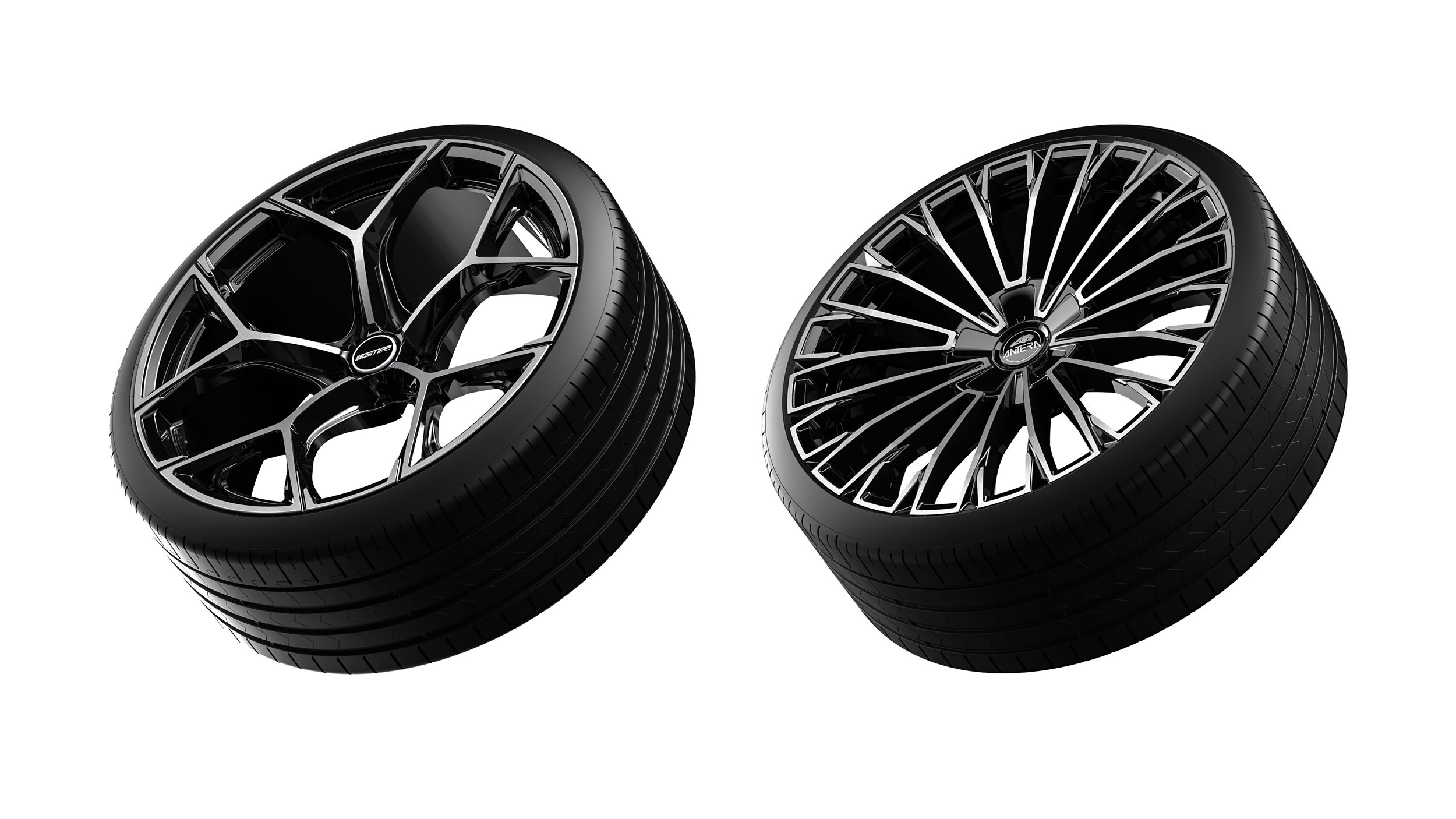
In this scenario, GMP Italia embodies the contemporary evolution of the sector: a brand that combines design culture, industrial quality, and stylistic research, turning the wheel into a true distinguishing element of the car. Each collection is born from the balance between engineering and design, with the goal of offering solutions that enhance the vehicle’s performance, aesthetics, and personality.
Ultimately, the importance of alloy wheels in the automotive industry today is total: they are a symbol of innovation, performance, and style. And they will continue to evolve alongside the car of the future, guided by brands like GMP Italia, which make the wheel not just a component, but a signature of character.